


Like NYC and Paris, Chicago Was Once a Hub for Fashion Designers
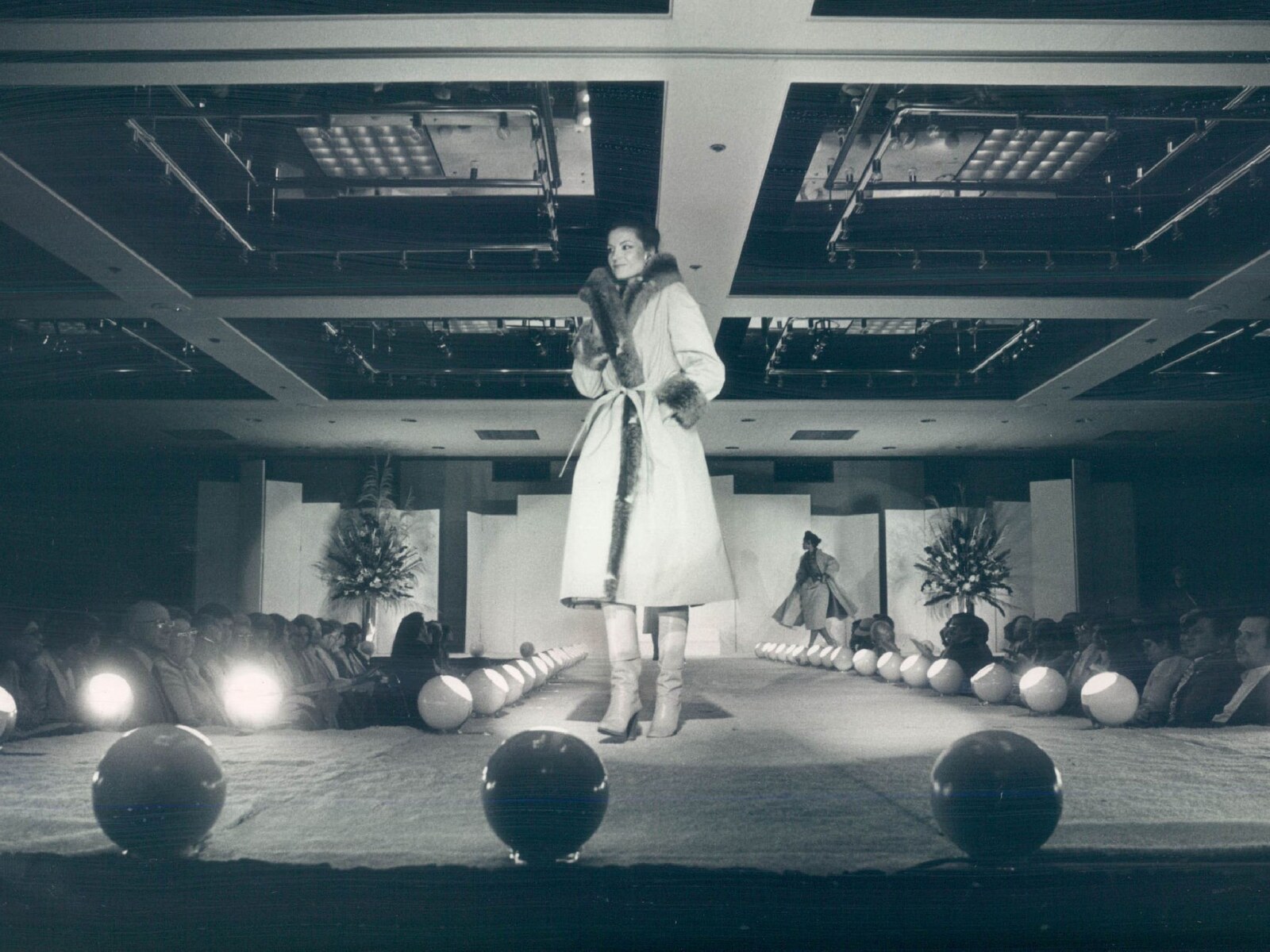
In the 1970s and '80s, Chicago fashion designers held their own against the top names in the industry — a Curious City look back at the city's overlooked fashion legacy.
Before Chicago was a city that shopped, it was a city that made clothes — and for two decades its designers competed directly with New York for attention, buyers and press.
A garment town before it was a shopping town
Chicago's fashion economy was built on the same logic as its stockyards and its rail hub: everything passed through here. Mail-order catalogs from Sears and Montgomery Ward dressed the American interior from warehouses on the West Side, and the manufacturing base that supplied them employed thousands of cutters, sewers and pattern makers within the city limits.
That industrial base is what made a design scene possible. A young designer in 1970s Chicago could get a sample sewn across town in a week, because the factories were still here and the people who ran them answered the phone.
The Apparel Center years
The Apparel Center, opened alongside the Merchandise Mart in the late 1970s, gave the industry a physical center of gravity. Showrooms filled floors, market weeks brought buyers from across the Midwest, and a designer working out of a Chicago studio could show to regional department stores without leaving River North.
Chicago designers of that era were not operating as a provincial satellite. They were selling into national accounts, being written about in the trades, and dressing a moneyed local clientele that did not particularly care what New York thought. The city's aesthetic ran toward wearable, structured, cold-weather clothes — practical in a way coastal collections were not, which was both its identity and, eventually, part of its marketing problem.
What went wrong
Two forces dismantled it. Manufacturing moved offshore through the 1980s and 1990s, and the local sample-and-production ecosystem that made Chicago workable for small labels thinned out. At the same time, fashion media consolidated in New York, and a designer's proximity to a handful of editors started to matter more than proximity to a factory.
The regional buying trip also died. When department store chains centralized purchasing, the Midwest market weeks that filled the Apparel Center lost their reason to exist. Showrooms emptied, and the building was eventually converted to other uses — a physical marker of an industry that had left.
The parts that never left
What survived is smaller and harder to see from downtown. Independent labels, custom tailors, milliners, and a deep streetwear and sneaker culture kept working through the lean decades. Chicago's costume and theater trades — among the strongest in the country — kept skilled hands employed. Vintage and resale, especially on the North and Northwest Sides, built a fashion literacy in the city that never depended on a runway.
There is also a design pipeline that never stopped: Columbia College, the School of the Art Institute, and a set of high school fashion programs that consistently produce technically strong graduates. The talent question in Chicago has never been supply. It has been whether the city gives that talent somewhere to sell.
Why the history matters to the current push
The current effort to build a Chicago fashion week is often framed as creating something new. The record suggests otherwise: the city had the infrastructure, lost it, and is now trying to rebuild a version of it without the manufacturing base that underwrote the first one.
That is not an argument against trying. It is an argument for being specific about what has to be replaced — sampling capacity, a buying calendar, and press that treats Chicago work as national work rather than regional color. The designers of the 1970s and '80s did not need to be told their clothes were good. They needed a market week that buyers actually flew in for.
For readers, the useful move is simple and local: buy from Chicago labels, go to the trunk shows, and treat the city's design history as something with receipts rather than nostalgia.
Additional reporting: WBEZ Curious City. Eventchaser adds original Chicago context, verification, and on-the-ground detail.
Read the original report at WBEZ Curious City.

Sponsored
More in Fashion
Eventchaser verifies event details and sources before publishing. See our editorial policy.